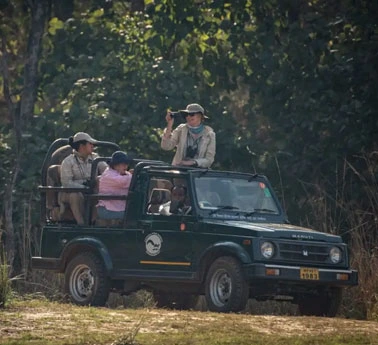
Jhalana runs on open jeeps — you'll be exposed to sun, wind, dust and rapidly changing light. Sightings happen suddenly and finish fast. Right gear makes the difference between a memory and a photograph.
Camera tips
Best camera type
- DSLR / mirrorless — ideal. High image quality, fast focus, superior zoom lenses, good in low light.
- Bridge camera — good budget option. Strong built-in zoom, lightweight, better than any smartphone.
- Smartphone — fine for landscape shots and close-range scenes; poor at distance.
Recommended lens
200–400mm zoom — the sweet spot for leopard photography. Enough reach for distant animals, flexibility as the subject moves.
70–200mm — great when leopards come close (which they often do). Lighter, sharper, easier to handhold.
A wide-angle lens is fine for landscape but useless for wildlife detail.
Essential settings
- Fast shutter speed: 1/1000s or faster to freeze movement.
- Continuous autofocus (AI Servo / AF-C): for tracking moving cats.
- Burst mode: capture multiple frames per second — you'll thank yourself later.
- ISO up, shutter open longer in low light of dawn/dusk.
Camera protection
- Dust cover or plastic bag — Aravalli tracks are dusty.
- Extra batteries — cold mornings drain them fast.
- Extra memory cards.
- Fit your primary lens before leaving; don't change lenses mid-safari.
Clothing tips
Summer (March – June)
- Light cotton, full sleeves.
- Hat or cap.
- Sunglasses.
- Light scarf against dust and sun.
Winter (October – February)
- Layers — the safari warms up as the sun rises.
- Windproof jacket for the open jeep.
- Gloves — warmth plus a steady camera grip.
- Comfortable trousers.
Monsoon
- Quick-dry fabrics.
- Light rain jacket or poncho.
- Closed shoes for muddy ground.
Best colours to wear
Earth tones only — brown, olive, beige, khaki. They blend into the forest. Bright red, yellow, blue and neons stand out to wildlife and reduce your sighting chances.
Footwear
- Closed comfortable shoes — running shoes are perfect.
- No sandals or flip-flops.
- Heavy hiking boots are overkill.
What NOT to carry
- Large backpacks (no space in the jeep).
- Camera flash (disturbs wildlife — many parks ban it).
- Tripods (space, restrictions).
- Noisy items — speakers, bells, anything that beeps.
First-timer checklist
- Camera
- Lens (200–400mm ideal)
- Spare battery + memory card
- Neutral-colour clothing
- Sunglasses
- Cap or hat
- Water bottle
- Government photo ID (passport for foreign guests)
Final advice
Plan and pack simple. Photography matters, but so does being present. Let your guide handle the tracking; you handle the shutter — and remember to occasionally put the camera down and just watch the leopard walk past you.