Short answer
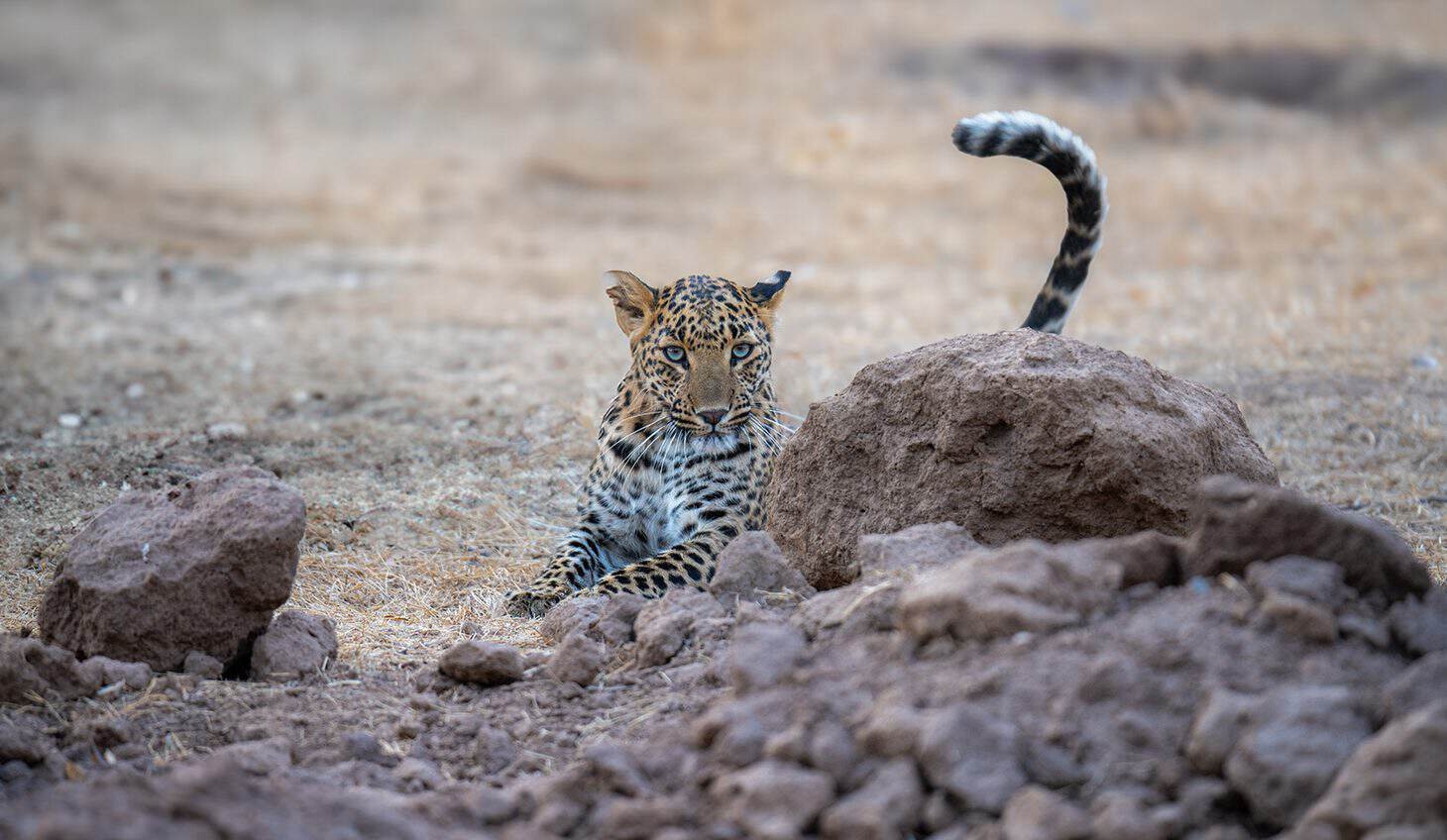
Yes — you can see leopards easily during a Jhalana safari. But high probability is not a guarantee. Many visitors spot leopards on their first safari, others don't. Leopards are wild animals; they can hide, rest behind rocks or wander far from safari routes. Realistically: high probability, no guarantee.
Why Jhalana has high sighting chances
Jhalana isn't a vast forest. It's a compact 20 sq km reserve with a very high leopard density inside. In big national parks, animals can roam huge distances. Here, they live in a smaller, well-defined area — which means better encounter odds.
The leopards are used to safari vehicles. They see jeeps every day and don't panic. Some individuals casually walk past vehicles without even looking. This calm behaviour lets guides get close enough for you to really see the animal.
Terrain helps too: rocky hills, small mountains and open scrub give clearer sightlines than dense forest. Guides monitor movement across the reserve and radio each other when they spot activity.
Morning vs Evening for sightings
Both slots offer good chances. Mornings tend to have cooler weather and more predictable early leopard movement. Evenings feature territorial patrolling and beautiful sunset light. Seasons matter — summer waterhole sightings are more reliable, monsoon vegetation makes spotting harder.
What affects your probability
Zone allocation
Jhalana is divided into zones. Some zones see more leopard traffic than others on a given day. Zones are allotted at booking — no zone has a 100% guarantee.
Guide & driver experience
An experienced guide changes everything. They read behaviour, spot pug marks, know each leopard's usual haunts, and drive strategically to increase your chances.
Season
Summer = animals concentrated at waterholes, easier sightings. Winter = pleasant, active leopards. Monsoon = green forest, lower visibility.
Weekend crowds
Weekends bring more vehicles and more noise. Weekdays are quieter, and sightings feel more intimate.
Your behaviour
Sudden movements, standing up in the jeep or loud voices scare wildlife. Stay quiet and patient — your guide will thank you.
Realistic expectations
Wildlife is unpredictable. No safari park in the world guarantees sightings. What you can do: pick the right slot, use an experienced operator, and consider booking two safaris to double your chances. Every safari is a fresh dice roll.
Jhalana vs Jawai and Ranthambore
Jhalana vs Jawai
Jawai leopards live around granite hills and are often photographed at height. Safaris are unfixed, tracker-dependent. Jhalana has structured routes and higher probability per safari.
Jhalana vs Ranthambore
Ranthambore is a tiger-first park. Leopards exist but are harder to spot. Jhalana is designed entirely around leopards.
Who should choose Jhalana
- First-time wildlife visitors — small park, frequent sightings, easy first experience.
- Short Jaipur trip travellers — the safari fits in half a day.
- Photographers — open terrain, dramatic light, close encounters.
- Families — no long drives, no rough terrain for children or elderly guests.
Final verdict
If your goal is a wild leopard sighting, Jhalana is one of your strongest bets in India. Small area + healthy population + open terrain + structured safari system = consistently high probability. Book in advance, book with an experienced operator, and set realistic expectations. You'll likely leave having seen a leopard — often more than one.
Book to maximise chances
Two safaris across two slots gives you the best odds. Callback within 15 minutes.
Book Safari