Short answer
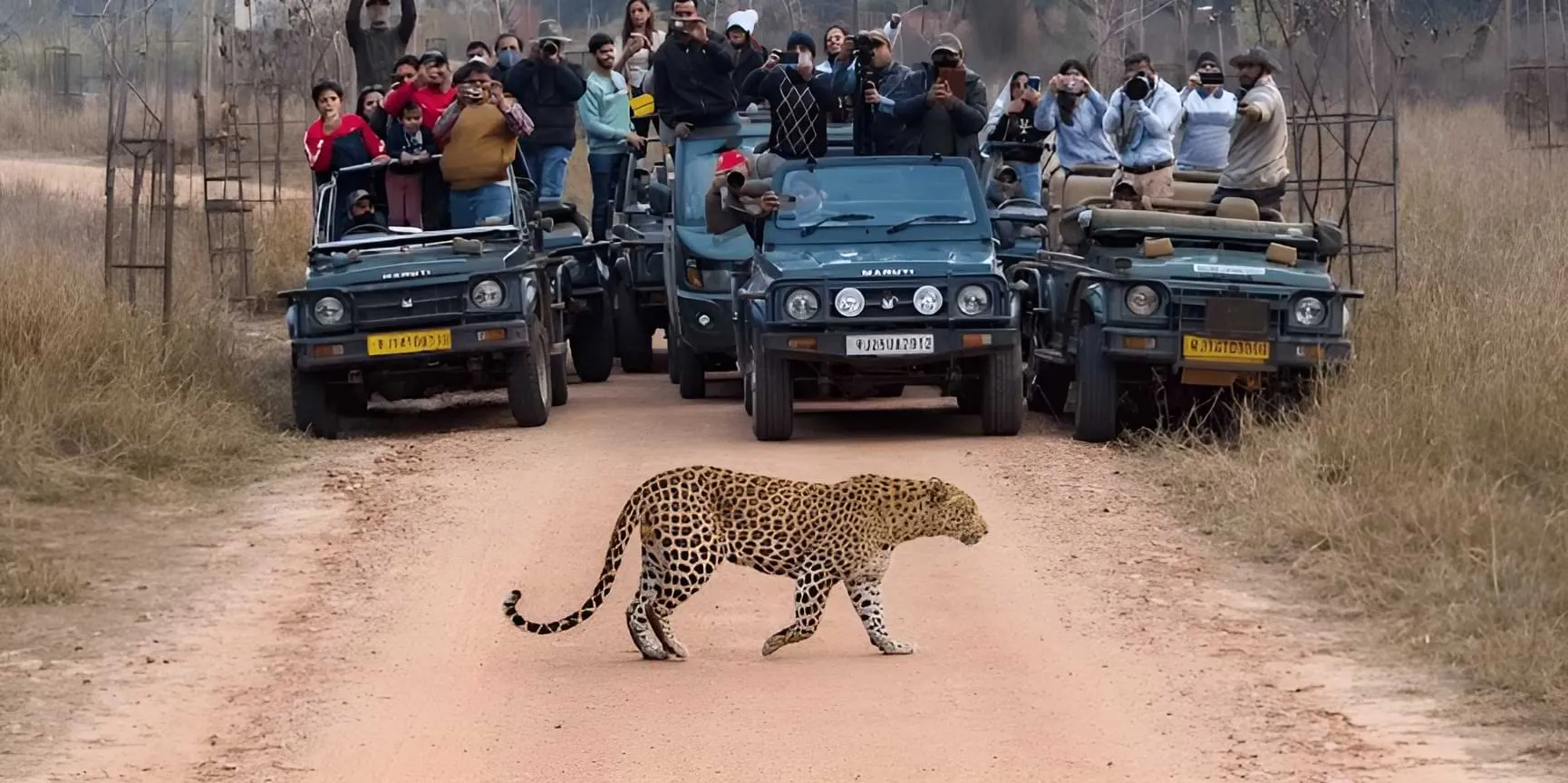
Your chances of spotting a leopard at Jhalana are quite high — but never guaranteed. The reserve has a dense leopard population in a compact 20 sq km, so sightings are far more frequent than at most parks. But leopards are wild animals following their own patterns.
Why Jhalana has a higher sighting probability
- High density: 40+ adult leopards in 20 sq km — one of India's densest populations.
- Habituation to vehicles: leopards see jeeps daily and treat them as neutral objects, not threats.
- Open rocky terrain: Aravalli hills and scattered bush give clear sightlines.
- Structured routes: fixed safari paths plus tracker communication maximise coverage.
What impacts your chances
- Timing: mornings tend to be cooler and quieter.
- Season: summer drives animals to fewer waterholes = higher probability.
- Zone allocation: different zones have different leopard traffic on any given day.
- Guide experience: a seasoned tracker changes everything.
- Crowd: weekdays are quieter and produce calmer sightings.
Morning vs Evening — which has better chances?
Both work. Morning tends to have a small edge on sighting rate; evening produces more territorial and hunting behaviour. Read our full morning vs evening guide.
Can you see multiple leopards in one safari?
Rare but possible. Leopards are solitary. Exceptions: mother-with-cubs sightings, or spotting different individuals in different parts of the reserve during a single drive.
When sightings may be lower
- Heavy monsoon rain (thick vegetation, poor visibility)
- Extreme winter cold in early mornings (animals still resting)
- Overcrowded weekends when noise disturbs animals
One safari vs two safaris
Booking two shifts across two slots definitely increases your odds. You get two independent chances at different times of day, often across different weather conditions. If leopard-seeing is the priority, always double up.
Jhalana vs other leopard spots
Jhalana vs Jawai: Jhalana's structured system is more reliable for short visits. Jawai depends more on patient tracking.
Jhalana vs Ranthambore: Ranthambore is tiger-focused. Jhalana's entire operation is built around leopard sightings.
Honest verdict
Jhalana suits enthusiasts, first-time visitors, families and short trips. If you want a strong chance of seeing a wild leopard without a multi-day commitment, book here. If you expect a 100% guarantee, no wildlife park anywhere can give you that.