

Chances of Seeing a Leopard in Jhalana Safari – The Honest Reality
Ready for a thrilling encounter with Jhalana’s majestic leopards? Plan your perfect safari now. Leave the booking worries to us—we’ll take care of it!
One of the most common questions many people ask while visiting Jhalana Leopard Safari is, “What are the real chances of spotting a leopard during the safari?”
Jhalana is considered one of the best places for leopard sightings in the wild. But it is also important to understand the real probability of spotting a leopard before you book your safari. And to know the honest reality behind it, before you set any unrealistic expectations.
Short Answer – What Are Your Real Chances?
The answer is simple: “your chances of spotting a leopard are quite high, but can never be guaranteed”.
Jhalana is a small forest area with a relatively high population of leopards. This makes sightings happen quite often compared to other wildlife parks. Many visitors happen to spot at least one leopard during their safaris.
At the same time, it is important to remember that the nature of wildlife is unpredictable. Leopards are wild animals and they like to move freely, rest in hidden places and follow their own routes.
Sometimes they may be very active and other times, they may stay deep inside the forest. This makes the probability high but never guaranteed. So, going with realistic expectations keeps the safari exciting and enjoyable.
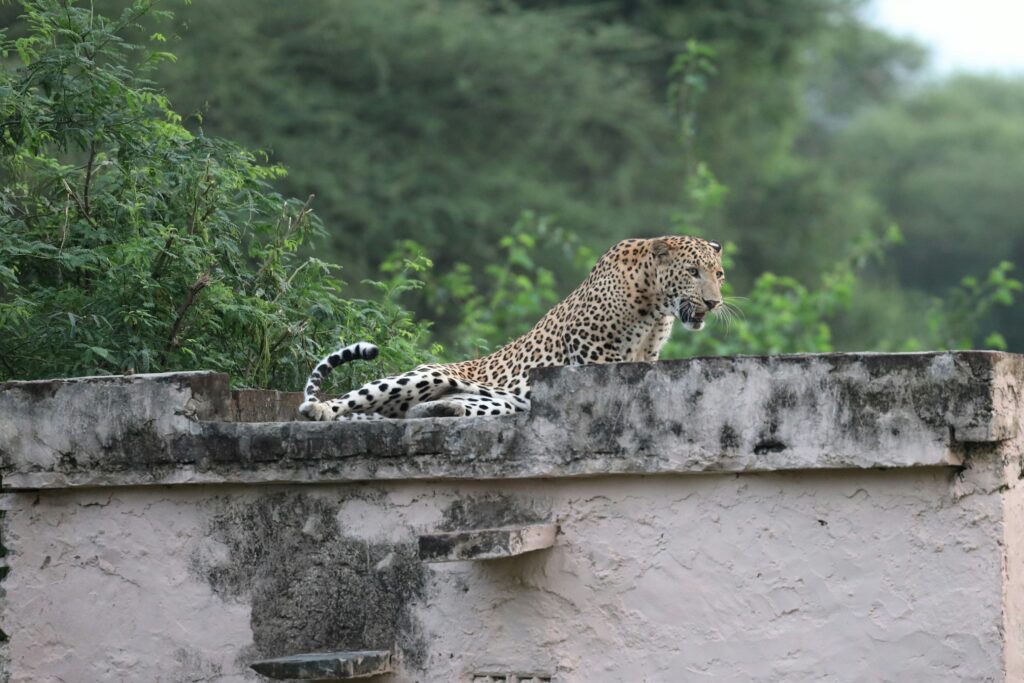
Why Jhalana Has a Higher Leopard Sighting Probability
Jhalana is known for its high probability of leopard sightings. And because animal activities in wildlife are never fully predictable, a few important factors increase the chances of leopard sightings.
High Leopard Density in a Small Area
Jhalana has a good number of leopards for a small forest area. This gives the animals a smaller space to move around, which increases the chances of spotting them during the safari.
Leopards Habituated to Safari Vehicles
Leopards in the safari are habituated to seeing safari jeeps every day. Over time, they have become used to these vehicles and generally do not get scared easily. They often continue walking or remain rested when there is a jeep nearby.
Open Rocky Terrain Improves Visibility
The terrain of Jhalana has an open landscape, rocky hills and scattered bushes. This makes it easier to spot any animal from afar. Many times, leopards are often seen sitting on rocks or moving around the bushes, improving the overall visibility.
Structured Safari Routes & Monitoring
Safari in Jhalana follows a structured system with fixed routes and proper monitoring of leopard movements. Forest staff share information about recent sightings with the guides. This well-organized system helps vehicles reach where the leopard activity is seen to improve the chances of sightings.
What Impacts Your Leopard Sighting Chances?
Even though the probability of seeing a leopard at Jhalana is high, a few factors might still affect these chances during the safari.
Safari Timing (Morning vs Evening)
One such factor is the safari timings. Both the timings offer good chances of sightings, the mornings are generally cooler and leopards are seen to be active. While in the evening, they are often seen patrolling their territory at night.
Season (Summer vs Winter vs Monsoon)
Another factor of the season also affects the sightings, because in the summer animals often visit water sources, which makes it easier to spot them. Winters are usually more comfortable for steady animal activity. During the monsoon, their visibility becomes slightly harder due to thick vegetation.
Zone Allocation
The safari in Jhalana is divided into different zones. Sometimes, the leopard movement may be higher in some areas than others. Since visitors are assigned these zones at the time of booking, the chances are partly dependent on the zone you get.
Driver & Tracker Experience
An experienced guide and tracker can make a lot of difference in your safari. They understand animal behaviour well, track their movement and notice alarm calls from other animals. Their knowledge of the forest helps in locating the leopards more quickly.
Weekend & Holiday Crowd Pressure
Weekends and holidays at Jhalana generally have more safari vehicles, creating much more noise and disturbance. So, visiting on weekdays is better and provides a quieter and more relaxed safari experience.
Morning vs Evening – Which Has Better Chances?
Both the safari shifts at Jhalana offer good chances of spotting leopards. But factors like weather, seasonal differences or their activity pattern can slightly affect their sightings.
As the weather is cooler in the morning, leopards are often seen more active during this time. The morning light also helps visitors notice their movement more easily.
While in the evening, as the heat reduces, they sometimes come out again to mark their territories before the night.
On the other hand, seasons too can influence their activity.
In summer, animals prefer cooler hours, so they generally move out in early morning or late evenings.
And in winter, when the weather is pleasant, animal activity can be seen at both times.
Overall, both shifts have good possibilities of sightings; the final outcome eventually depends on the natural animal movement.
Can You See Multiple Leopards in One Safari?
Seeing one leopard during your safari is already an exciting experience. But sometimes, if you are lucky enough, it is possible to spot more than one leopard’s ring at the same time.
Leopards are wild animals, and they usually prefer to stay in their own areas. They do not often move in groups, so seeing them all at a single spot is not very common.
However, there may be situations when multiple sightings are possible. For example, when a mother leopard is with her cubs. These scenarios are rare but very special to encounter.
Also, sometimes, different leopards can be spotted in different locations during the same safari. This is very rare, but it is still possible.
When Sightings May Be Lower
Although the probability of leopard sightings is high, there are times when the chances may be lower. And this happens due to a few factors, like:
Heavy monsoon vegetation
During the monsoon season, the forest becomes very dense, and this thick vegetation blocks the clear visibility, making it harder to spot animals.
Extreme cold mornings
In winter, when the mornings are extremely cold, animals may hide for longer periods to save their energy. This reduces their movement during the morning shift of the safari.
Overcrowded days
There are days like weekends and holidays, when the park has more safari vehicles than usual. These overcrowded days increase the noise and can disturb the wildlife movement, making the sightings less frequent.
One Safari vs Two Safaris – Does It Increase Chances?
If you are a serious wildlife lover and want to make sure you get to spot the leopard, doing more than one safari can definitely increase your chances. With a single shift, the probability of sightings is limited to a single chance.
But by booking two safaris, you give yourself two different shifts with different chances to spot wildlife. And since leopard movement changes throughout the day, the next shift significantly increases the overall possibility of a sighting.
This smart strategy improves your chances of seeing a leopard and also allows you to experience different activity patterns.
While this is a smart and practical strategy, it is important to remember that this strategy still does not guarantee a sighting because of wildlife’s unpredictable nature.
Is Jhalana Better Than Other Leopard Spots for Sightings?
When booking a safari, people often compare it with different wildlife safaris. Similarly, Jhalana safari is frequently compared with other famous places for leopard spotting in Rajasthan.
Jhalana vs Jawai (Reliability Factor)
One of them is Jawai, a well-known leopard reserve. It is famous for its beautiful open landscapes and granite hills where leopards roam freely. Sightings here can feel very exciting, as leopards are often seen resting on open rocks.
But it is different from Jhalana in its way because Jawai safaris are often structured and depend mainly on the local tracking system. And it may require you to be more patient and take more time.
On the other hand, Jhalana is a small forest area with regular monitoring. Its structured routes make sightings more reliable for short visits.
Jhalana vs Ranthambore (Tiger Priority vs Leopard Focus)
Another comparison to Jhalana is Ranthambore National Park. It is one of the most famous tiger reserves in India. Ranthambore is mainly famous for seeing tigers. Although leopards do live here, its focus is mostly on tiger sightings.
But in Jhalana, leopards are the main attraction and the entire safari is organised for spotting leopards only. This gives visitors a much higher chance of seeing one during the safari.
Honest Verdict – Should You Book Jhalana for Leopard Sightings?
If you are a wildlife lover and want to see a leopard in the wild, the Jhalana leopard safari is the best place to try your luck. This park has a healthy population of leopards in a smaller forest, giving visitors a higher probability of leopard sightings.
All this makes Jhalana an ideal place for first-time wildlife visitors, families and travellers or short trips. It is easily accessible from Jaipur city, and the structured safari system makes the experience easy and convenient.
But, for people expecting guaranteed sightings, they may feel disappointed because of the unpredictability of wildlife. Hence, if you go with a realistic expectation and a well-planned safari, Jhalana can offer you a very rewarding and memorable safari experience.
More Related Blogs
Is Jhalana Leopard Safari Worth It? | Jhalana Leopard Safari Morning vs Evening | Jhalana Leopard Safari vs Ranthambore | Is Jhalana Leopard Safari Safe? | Photography Experience at Jhalana Leopard Safari | Best Time to Visit Jhalana Leopard Safari | Camera & Clothing Tips for Jhalana | Can You See Leopards Easily in Jhalana?