Camera & Clothing Tips for Jhalana Leopard Safari Visitors
Ready for a thrilling encounter with Jhalana’s majestic leopards? Plan your perfect safari now. Leave the booking worries to us—we’ll take care of it!
Going on a leopard safari at Jhalana is an exciting experience. While seeing a leopard in the wild is thrilling, one should always wear suitable clothes and carry the right gear for an overall comfortable experience.
This could make a huge difference in your experience.
Why Proper Gear Matters on a Leopard Safari
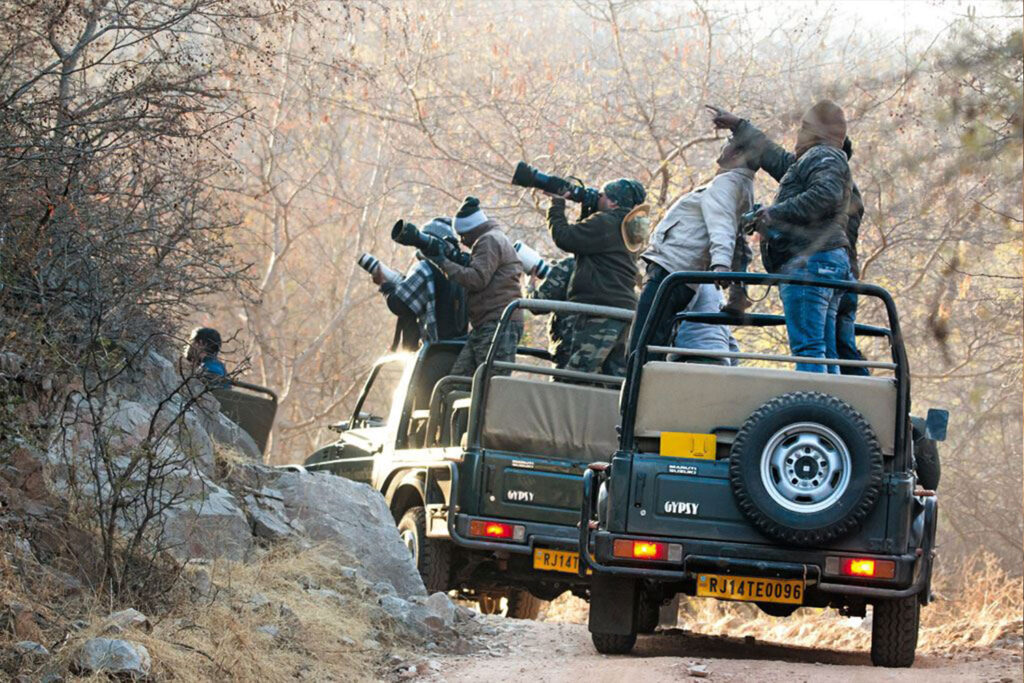
The safari is usually done in open jeeps, making visitors fully exposed to the outer environment.
Visitors have to deal with sunlight, wind and dust during the drive, which makes it important to wear comfortable and practical clothes. Weather conditions, too, can affect the safari experience. During the summer, heat may be extreme with dust due to the dry forest. Having gear like caps, sunglasses, or light scarves can save you from these.
Also, because wildlife sightings happen suddenly most of the time. A leopard may appear out of the bushes for only a few seconds sometimes. So, having a camera handy can help you capture these quick moments easily.
To maximise your sighting experience, visitors must come with the right preparation to stay relaxed and enjoy the safari experience.
📷 CAMERA TIPS SECTION
Best Camera Type for Jhalana Safari
Carrying the right kind of camera can make a big difference in your safari experience.
Because leopards may appear suddenly or may be spotted at a distance. So, a good quality camera with good zoom and fast focus can help you capture such rare moments.
DSLR / Mirrorless (Ideal Option)
DSLR/mirrorless cameras are generally the ideal choice for wildlife photography. These cameras offer high quality images, faster focus and better zoom lenses. For example, a lens with a 200mm to 400mm zoom can capture clear shots of animals far away also perform well in low light.
Bridge Cameras (Budget Alternative)
If you are on a budget, Bridge cameras are a good option with strong zoom capacity. They come with large built-in zoom lenses, making them useful for wildlife photography.
These are lightweight, easy to handle and suitable for beginners who want to capture better images than a phone camera.
Smartphone Photography – Is It Enough?
Many smartphones nowadays have good-quality cameras for landscape shots and quick pictures. They can capture nice memories of the safari, especially when the animals are closer to the vehicle.
But smartphones do have a limited zooming capacity, so they may not be able to capture clear photos of animals far away. For the best and most serious wildlife shots, a zoom camera usually gives better results.
Recommended Lens for Leopard Photography
A right lens is recommended for leopard photography because it can make a huge difference to the quality of your wildlife pictures at Jhalana Safari.
Leopards can be spotted in different places, like on rocks, inside bushes or at a distance. A good zoom lens can help you capture clear images.
200mm–400mm Zoom Advantage
This is often considered the ideal lens for leopard photography. A range of up to 400mm allows it to capture detailed shots of animals that are far from safari vehicles. It also offers flexibility to adjust the frame when the leopard moves or changes positions.
When 70–200mm Works
This range lens can still work for photography, but only in some cases. If the leopard comes closer to the vehicle or sits nearby, these lenses are able to capture sharp and clear photos. It is also comparatively lighter and easier to handle inside a moving jeep.
Why Wide Lens Isn’t Enough
Although wide lenses are great for landscape photography, they do not usually suit wildlife photography. Because leopards can be spotted at a distance, the wide-angle lens can capture the whole image but may make the animal appear too small. This is why many photographers prefer zoom lenses for safari trips.
Essential Camera Settings for Wildlife
Capturing wildlife shots often happens really fast. Leopards may appear only for a few seconds, or their movement might only last for a short time. So, using the right camera setting is helpful to capture clear and sharp images.
Fast Shutter Speed
A fast shutter button helps freeze the frame, as leopards can walk or may disappear into the bushes quickly. A shutter speed of 1/1000 or faster can help you capture these animal movements without any blur.
Continuous Autofocus Mode
Using continuous autofocus mode allows the camera to keep the focus on animals, even if they are moving. This is useful when a leopard is walking along the trail and you want to capture them moving.
Burst Mode for Movement
Bust mode is useful when you want to take multiple photos in a few seconds. This feature increases the chances of getting at least one perfect shot while the leopard moves suddenly.
Low-Light Adjustments (Morning/Evening Safaris)
Natural light during morning and evening safaris is often softer. Increasing the ISO setting slightly and keeping the shutter open can help you capture much brighter images.
Camera Protection in Safari Conditions
Safaris can be dusty and sometimes rough for camera equipment. It is equally important to take a few precautions to protect your gear.
Dust Protection
Forest trails can have a lot of dust during the safari. To prevent dust from entering the lens of the camera body, you can carry a small protective bag or a cloth cover to protect it.
Extra Batteries (Cold Morning Drain)
Extra batteries come in use, especially during cold winter mornings, because they can sometimes drain batteries faster than usual. So, carrying a few extra batteries keeps your camera ready throughout the safari.
Memory Card Backup
Clicking many photos can make memory cards run out of storage quickly, which can be frustrating. Carrying a memory card allows you to keep shooting without going out of space.
Avoiding Sudden Lens Changes
Changing lenses during the ride can be difficult and can allow dust to enter the camera sensor. It is better to attach your main lens before the safari.
CLOTHING TIPS SECTION
What to Wear for Jhalana Safari (Season-Wise)
Wearing clothes according to the safari at Jhalana is very important. The right clothes help you stay comfortable throughout the ride, because the safari takes place in an open jeep, exposed to sun, wind and dust.
So, choosing practical clothes based on the season can make a big difference in the experience and make it much more enjoyable.
Summer Clothing (March–June)
During the summer, the weather can become quite hot in Jhalana, especially in the daytime. Wearing light and breathable clothes helps you protect yourself from the heat.
- Light cotton full sleeves: For example, you can wear cotton shirts or t-shirts to protect your skin from direct sunlight, and it also keeps you cool.
- Hat/cap: A hat or cap to protect your face and head from harsh sun.
- Sunglasses: Sunglasses can help reduce the glare or the bright light to help you clearly see the wildlife.
- Light scarf for dust: A light scarf can be useful to cover your face from dust during the safari, also adding extra protection from the sun.
Winter Clothing (October–February)
Winters in Jhalana can feel very cold, especially during the early mornings. Wearing layers and warm clothing helps you stay relaxed during the safari.
- Layered clothing: Wearing layers inside your jacket can easily help you adjust to the temperature during the safari.
- Windproof jacket: Wearing a windproof jacket in an open jeep is a must, as it protects you from strong cold winds.
- Gloves for morning safari: Gloves during morning safari can protect you from the cold and be useful when holding a camera for a long time.
- Comfortable trousers: Warm and comfortable trousers help protect your legs from the cold, dust and bushes during the long ride.
Monsoon Considerations
The forest area in Jhalana becomes greener during the monsoon season. This brings light rainfall and muddy paths, which may affect the safari conditions.
- Quick-dry clothing: In such conditions, clothes that are made of quick-dry material are preferred. They help you stay comfortable and dry quickly, even if they get wet during the rain.
- Light rain jacket: Carrying a light rain jacket or a poncho during the rainy season protects you from sudden showers.
- Closed shoes: Shoes that are closed are better for monsoon season because they protect your feet from any mud or moisture.
Best Colours to Wear on Safari
Wearing the right colours during the safari can also improve your overall experience. Any neutral shades help you blend better with the forest environment.
- Earth tones (brown, olive, beige): Tones like brown, olive green, khaki or beige are commonly recommended for safaris because they blend well with the forest surroundings.
- Avoid bright colours: Bright colors like red, yellow, or blue stand out strongly in the forest. That’s why wearing neutral tones keeps you less noticeable in the forest environment.
- Why neon shades disturb wildlife: Bright and neon colors can attract attention and may disturb animals. While wildlife in safari areas is used to vehicles, wearing calm and natural colors helps maintain a calmer wildlife experience.
Footwear Tips for Safari
Choosing the right footwear is very important for a safari at Jhalana. Usually, safaris involve sitting in an open jeep for a long time, and some short walks on rocky trails, wearing comfortable shoes is recommended.
- Closed comfortable shoes: Shoes that are closed not only protect your feet from dust, but also from small stones and rough ground. They keep you more comfortable during the entire safari.
- Avoid sandals: Any sandals or casual footwear are not ideal for safari because they provide less protection to your feet and dust can easily enter them.
- Light trekking shoes: Simple trekking shoes or sports shoes are usually enough for a safari. You do not need to have heavy hiking boots.
What NOT to Carry on Safari
While planning for a safari, it is equally important to avoid things that are not necessary to carry with you. Things that may disturb wildlife or make your ride uncomfortable:
- Large or heavy backpacks can feel inconvenient inside the safari when the space is limited in the jeep. Only carry items that are needed.
- Using flash while taking photos of animals is not encouraged. Because sudden light can disturb them and affect their natural behaviour.
- Tripods are usually restricted and often not allowed in the safari vehicle because they take up so much space and can make movement difficult inside the jeep.
- Items that make loud noises, like metal accessories or speakers must be avoided. A calm environment helps maintain a peaceful safari experience.
First-Time Visitor Checklist
For every first-time visitor to Jhalana, carrying some essential items can help you stay comfortable during the safari. Keeping these simple items can make your experience easy and enjoyable.
- Camera
- Lens
- Extra battery
- Neutral coloured clothing
- Sunglasses
- A Cap or a hat
- Water bottle
Final Advice – Stay Comfortable, Stay Ready
Planning and keeping things simple for your safari can make it more enjoyable and practical. Wearing comfortable clothes and carrying camera gear gets you ready for sudden wildlife sightings.
While it is important to take photos, try also focusing on the overall experience. By enjoying the forest environment, observing animals and taking time to appreciate the wildlife.
Booking a properly organised safari at Jhalana can make it even smoother, allowing you to relax and fully enjoy your experience.
More Related blogs
Is Jhalana Leopard Safari Worth It? | Jhalana Leopard Safari Morning vs Evening | Jhalana Leopard Safari vs Ranthambore | Is Jhalana Leopard Safari Safe? | Can You See Leopards Easily in Jhalana? | Chances of Seeing a Leopard in Jhalana Safari | Photography Experience at Jhalana Leopard Safari | Best Time to Visit Jhalana Leopard Safari